
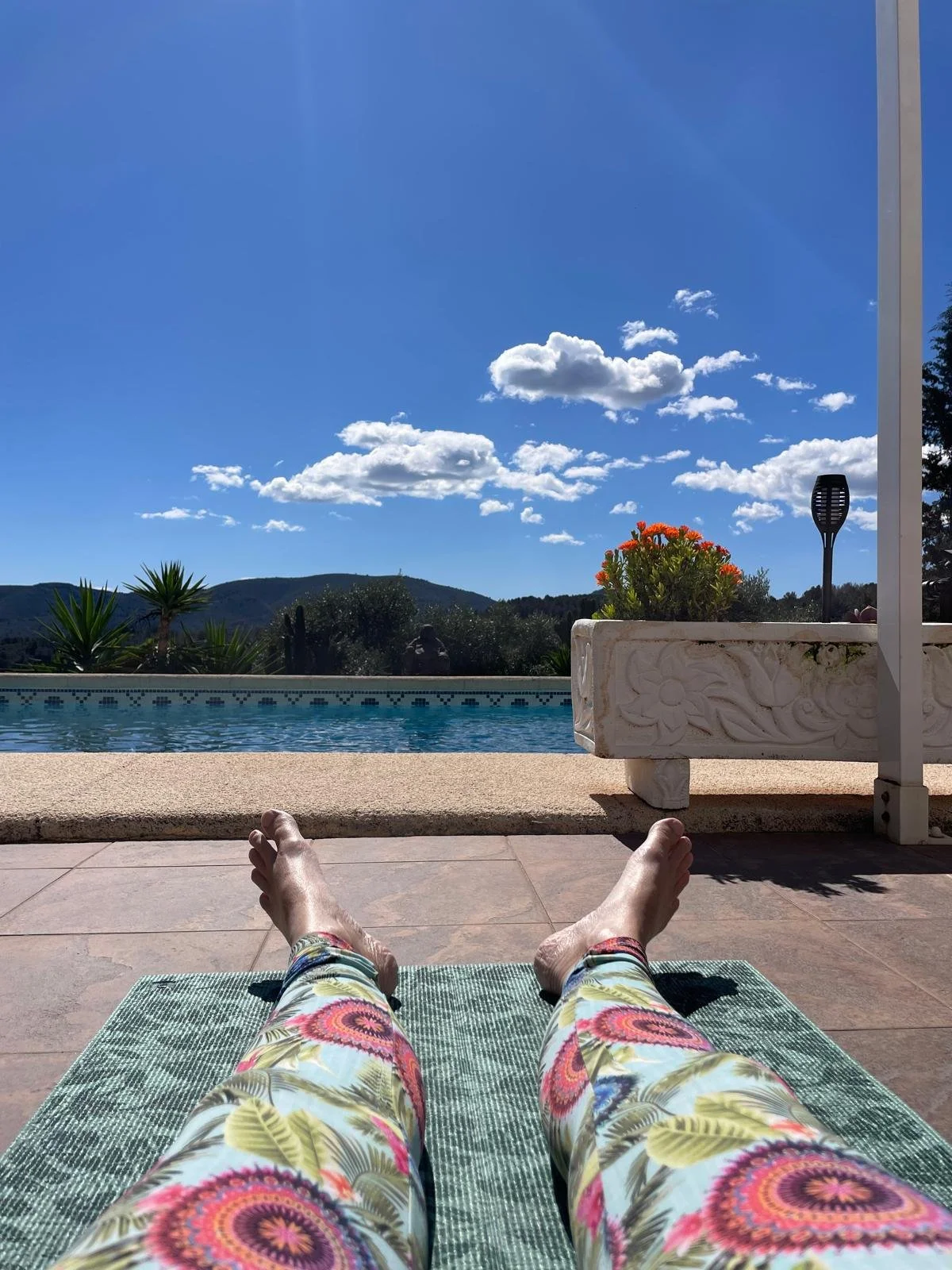
Embodied Yoga Practice
Embodied practice within the Awakening Within field
The Awakening Within Field
Entering Through Practice
Practice offers a simple and grounded way to begin engaging with the work.
For some, this begins through movement.
For others, through breath, stillness, or quiet observation.
Classes are offered both in person in small groups and online, allowing practice to remain attentive, steady, and responsive rather than performative.
The emphasis is not on achievement or physical intensity, but on developing awareness through the body and nervous system.
For many participants, regular practice becomes a foundation that quietly supports deeper reflection, integration, and discernment within daily life.

Why Practice
Embodied practice offers a way to return attention to the body and the quiet intelligence that moves through it.
Rather than striving for performance or achievement, practice becomes a space to notice how we move, breathe, and respond. Through movement, stillness, breath, and observation, awareness gradually deepens.
Over time many people begin to experience:
• greater ease and flexibility in the body
• improved balance and stability
• more attentive breathing
• a steadier relationship with thought and emotion
• moments of quiet presence within everyday life
Practice is not approached here as something to perfect, but as a way of listening more carefully to the body and the life force moving through it.
Anyone can begin a practice. What matters is not flexibility, strength, or experience, but a willingness to bring attention to what is already present.
Who the Practice Is For
Embodied practice at Casa de Alegría welcomes a wide range of participants.
Some people arrive completely new to yoga or contemplative practice and are looking for a gentle place to begin. Others have been practicing for many years and are seeking a quieter, more attentive approach to movement and awareness.
The small group environment allows space for individual pace and exploration. There is no expectation to perform, achieve, or compare with others.
People who tend to resonate with this practice include:
• beginners looking for a supportive introduction to yoga and embodied awareness
• individuals returning to movement after periods of stress, illness, or life transition
• experienced practitioners seeking a slower and more reflective practice environment
• those interested in exploring movement, breath, and awareness as part of personal growth
What matters most is a willingness to practice with attention and curiosity, rather than striving for physical performance.
Participant Reflections,
Voices from the Work
-
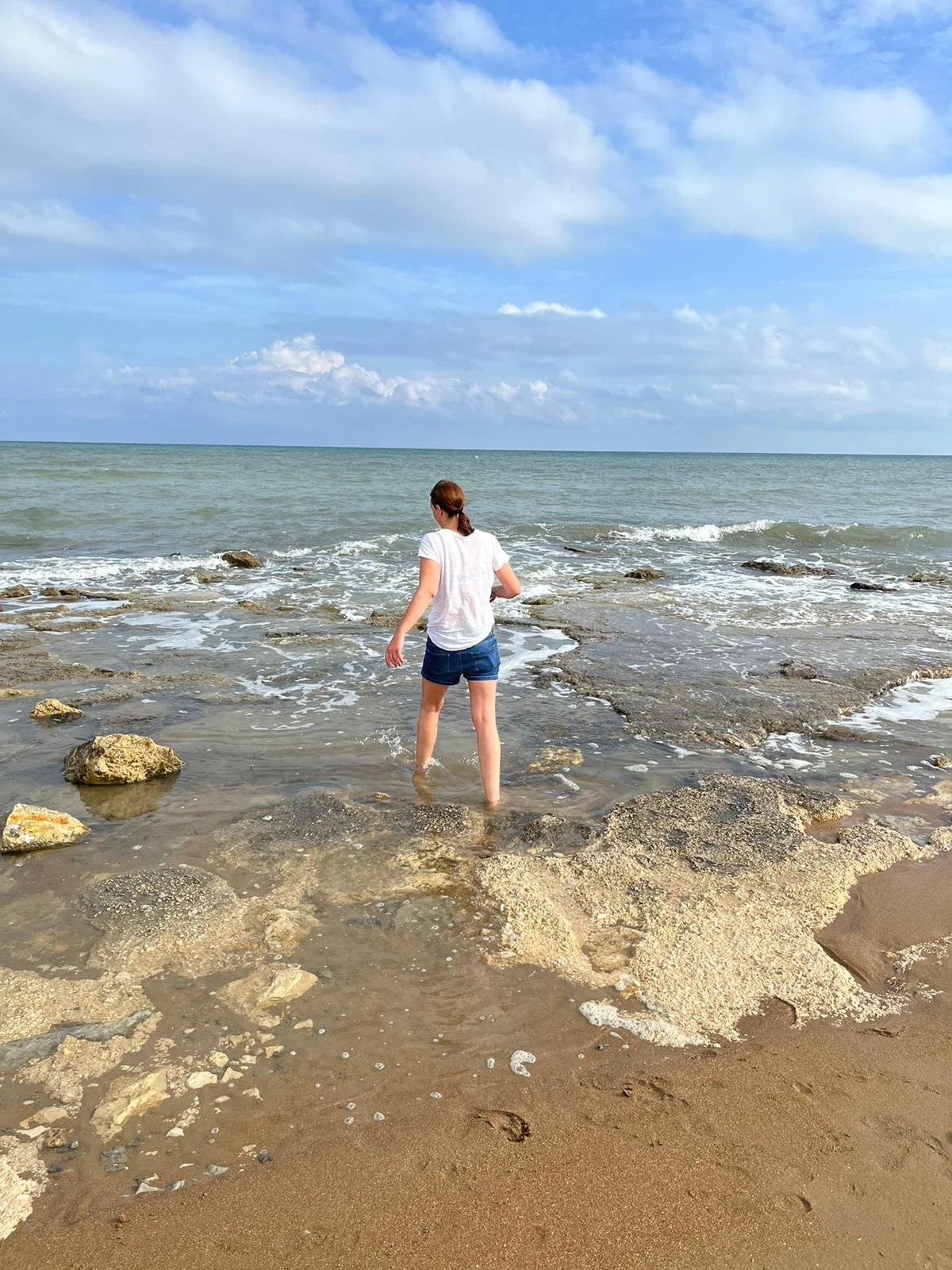
Caroline Leslie
“Caroline has created an online community for people looking to move their bodies in a gentle way and through her classes she encourages us to create a daily routine and teaches us how we can incorporate yoga into our daily lives.
Caroline does not teach the usual “Westernised” style of yoga. Her classes focus on the original form of gentle movement, breathing and meditation - there is no pressure to push our bodies into positions that feel unachievable. Her classes are truly accessible to everyone!”
-

Pat Redman
“Caroline has led me toward believing that I can achieve something that I thought I could not. I love the ‘complete package’ with the exercise, meditation, relaxing and exploring inner thoughts, something I have never been able to do before”
-

Jayne Harris
“With an emphasis on non-judgmental practice, Caroline simply offers suggestions to follow not positions to master. You are encouraged to go with what your body allows, and at your own pace”
-

Paula Smith
“Caroline stands out from other Yoga teachers, I love the fact that it’s “our” pose, we don’t have to fit the perfect position, love owning me! Caroline is relatable and I have learned that we are all different but that’s really ok to be me, no pressure. I’m enough. We don’t have to be perfect. Thank you ❤”
Ways of Practicing
Practice at Casa de Alegría explores movement, stillness, breath, and awareness through several complementary approaches. Each style offers a different way of listening to the body and developing presence.
Participants are welcome to explore whichever practices feel appropriate for their current stage of experience.
Types of Practice
Practices are grouped below according to the different ways we explore movement, stillness, breath, and awareness.
-
Scaravelli Inspired Hatha
This approach to yoga is influenced by the work of Vanda Scaravelli, emphasising breath, awareness of the spine, and the natural intelligence of the body.
Rather than forcing shapes or striving for achievement, the practice invites curiosity and sensitivity. Small, functional movements allow tension to release gradually while developing stability, mobility, and ease.
Students are encouraged to move at their own pace and to discover how the body responds rather than copying external forms.
Gentle Hatha Flow
Gentle Hatha Flow introduces slightly more dynamic movement while maintaining a reflective pace.
Practices may include flowing sequences such as sun salutations combined with slower moments of stillness. Yin and Yang elements are often woven together, moving between passive holds and gentle flowing sequences before returning to rest and integration.
-
Restorative Yin
Restorative Yin blends passive Yin postures with supported restorative pauses.
The practice begins gently, gradually exploring longer-held poses that allow the deeper connective tissues of the body to release. Periods of rest between postures help the nervous system settle and support deeper relaxation.
Restorative Practice
Restorative sessions focus entirely on relaxation and nervous system restoration.
Using props such as cushions and blankets, the body is supported in comfortable positions for extended periods of rest.
Movement is minimal and effort is unnecessary.
These sessions often conclude with Yoga Nidra or guided visualisation.
-
Meditation
Meditation classes explore a range of approaches to stillness and awareness.
Sessions may include breath observation, mantra, sound, guided imagery, or periods of silence.
Gentle movement or restorative postures may also be included to support comfort and ease before deeper stillness.
The emphasis is on developing presence and attentiveness rather than achieving a particular mental state.
Breathwork (Pranayama)
Breathwork practices explore how breathing patterns influence the body and mind.
Through gentle techniques participants learn how to observe and work with the breath to support relaxation, clarity, and awareness.
Yoga Nidra & Guided Visualisation
Yoga Nidra, sometimes described as “yogic sleep,” is a deeply restorative form of guided meditation practiced lying down.
Through guided awareness and intention setting, the body enters a state of deep rest while the mind remains attentive.
Guided visualisation practices similarly support deep relaxation and allow the body and mind to settle into quieter states of awareness.
-
Yoga Masterclass
Yoga Masterclasses provide space for deeper exploration of yoga practice.
These sessions may include posture clinics, breathwork exploration, philosophical discussion, sound practices, or guided inquiry into the principles of yoga.
Participants are encouraged to ask questions and explore their own experience of practice.
Conscious Movement & Sound
These sessions explore movement and expression through music, rhythm, voice, and breath.
Rather than following fixed sequences, participants are guided to explore spontaneous movement and sound in a supportive environment.
The practice encourages freedom of expression and helps release habitual patterns of tension or inhibition.
-
Chair Yoga
Chair Yoga offers an accessible form of embodied practice for those with limited mobility or who prefer additional support while moving.
Practices take place seated in a chair rather than on a mat, allowing participants to explore movement, breath, and awareness in a stable and supportive way.
Sessions draw from the same principles used throughout the wider practice, including Scaravelli-inspired movement, functional and reflective exploration, breath awareness, and moments of meditation or guided visualisation.
The intention is not to simplify the practice, but to make it available and adaptable, supporting strength, mobility, and attentiveness in both body and mind.
-
Beginning Practice
For those who have wondered what yoga is really about, this course offers a gentle and supportive way to begin.
Caroline specialises in guiding beginners and those returning to practice after periods of physical, emotional, or mental difficulty. The small group environment allows participants to learn gradually without pressure or comparison.
Over the course of six classes, participants are introduced to the foundations of embodied practice, including:
• functional and reflective movement to support mobility and release tension
• awareness of the breath and its relationship with movement
• gentle attention to the spine and posture
• stillness, mindfulness, and meditation
• understanding how physical, emotional, and mental states influence one another
• a simple introduction to the origins of yoga and the intention behind practice
• awareness practices such as mudras and energy observationThe course provides a steady foundation from which participants can continue developing a personal practice at their own pace.
Ways to Practice
-
Online Classes
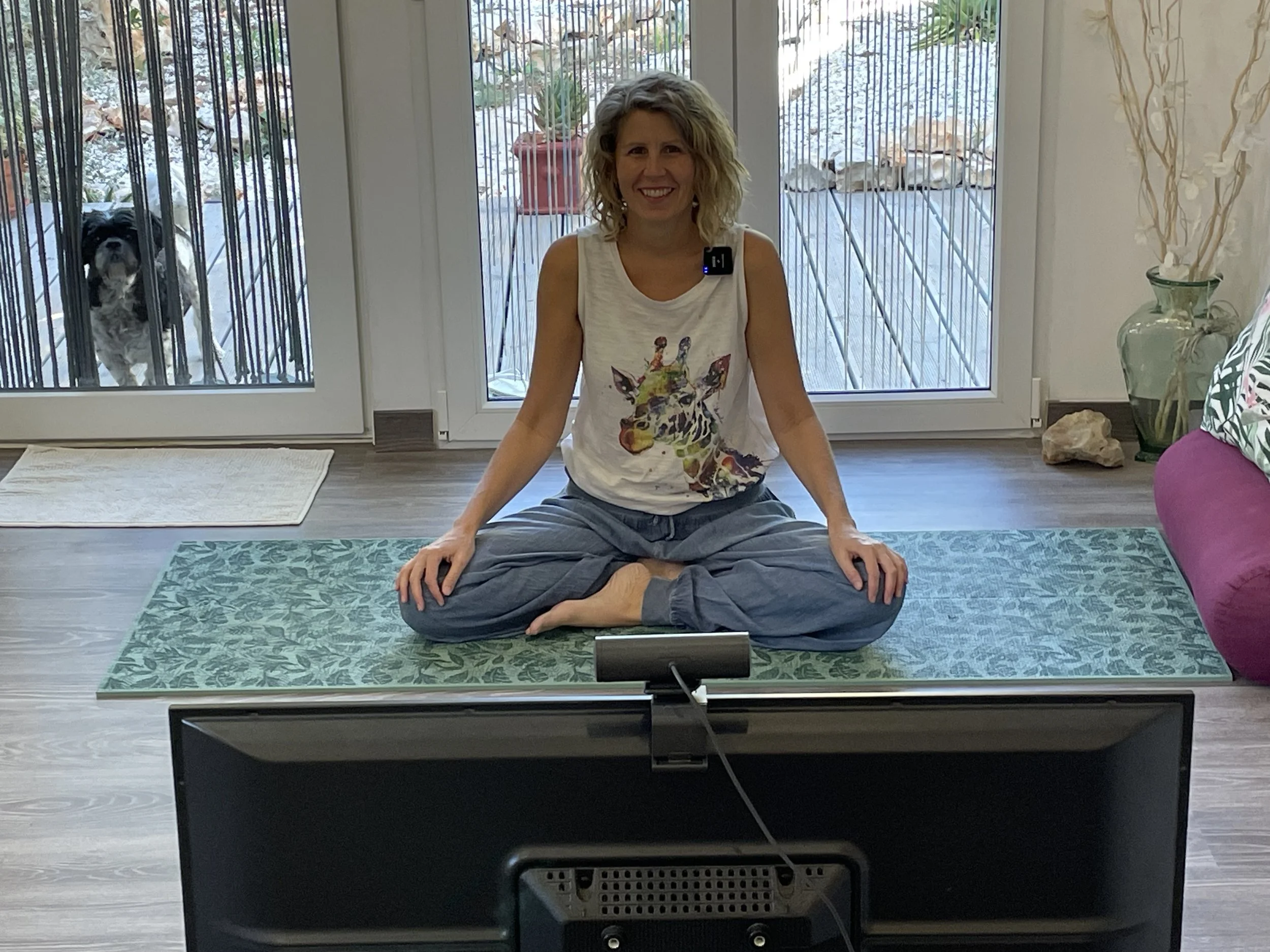
Live weekly online sessions allow participants to practice from anywhere.
Recordings are available for those who prefer to practice at their own rhythm or who cannot attend live sessions and remain accessible for one week following the class.
Online practice allows continuity and consistency, supporting those integrating the work alongside daily life.
-
In-Person Studio Classes
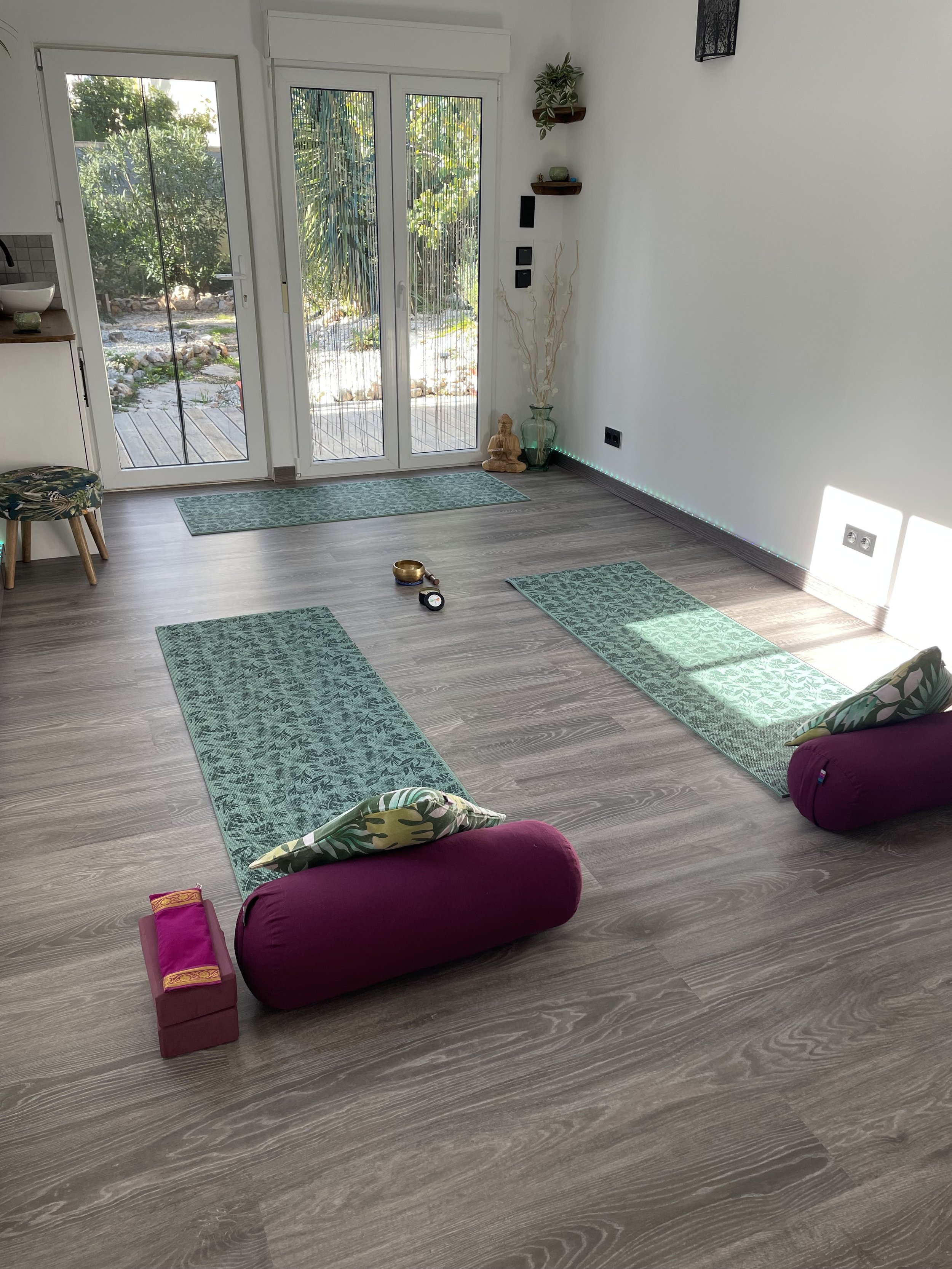
Small in-person classes are held in the private studio at Casa de Alegría in Spain.
The studio and online space open fifteen minutes before practice to allow time for quiet arrival and reflection before the class begins.
Class sizes are intentionally small in order to preserve attentiveness and space. They typically accommodate four to six participants depending on the type of class.
Participants practicing in person may also access the online recordings to support continuity between sessions.
Relationship to the Wider Work
For some participants, practice remains a steady personal rhythm.
For others, it becomes a doorway into deeper reflection through Substack, Immersion Retreats, Residency Intergration, or Mentoring.
Movement through the work is never prescribed.
Participants engage at the level that feels supportive to their own process.
Some participants complement regular practice with mentoring conversations that support reflection and integration alongside embodied work.
Booking Practice Sessions
Online and in-person classes can be booked through the scheduling system.
Participants staying for Residency Integration may join scheduled in-person classes during their stay, subject to availability.
Investment
Group Classes
€15 per session
10-class pass €135 (interchangeable between online and in-person classes)
1:1 Embodied Yoga Practice
€90 per session
Session packages are available for those continuing practice.
Current class times, packages, and availability are listed within the scheduling system.